













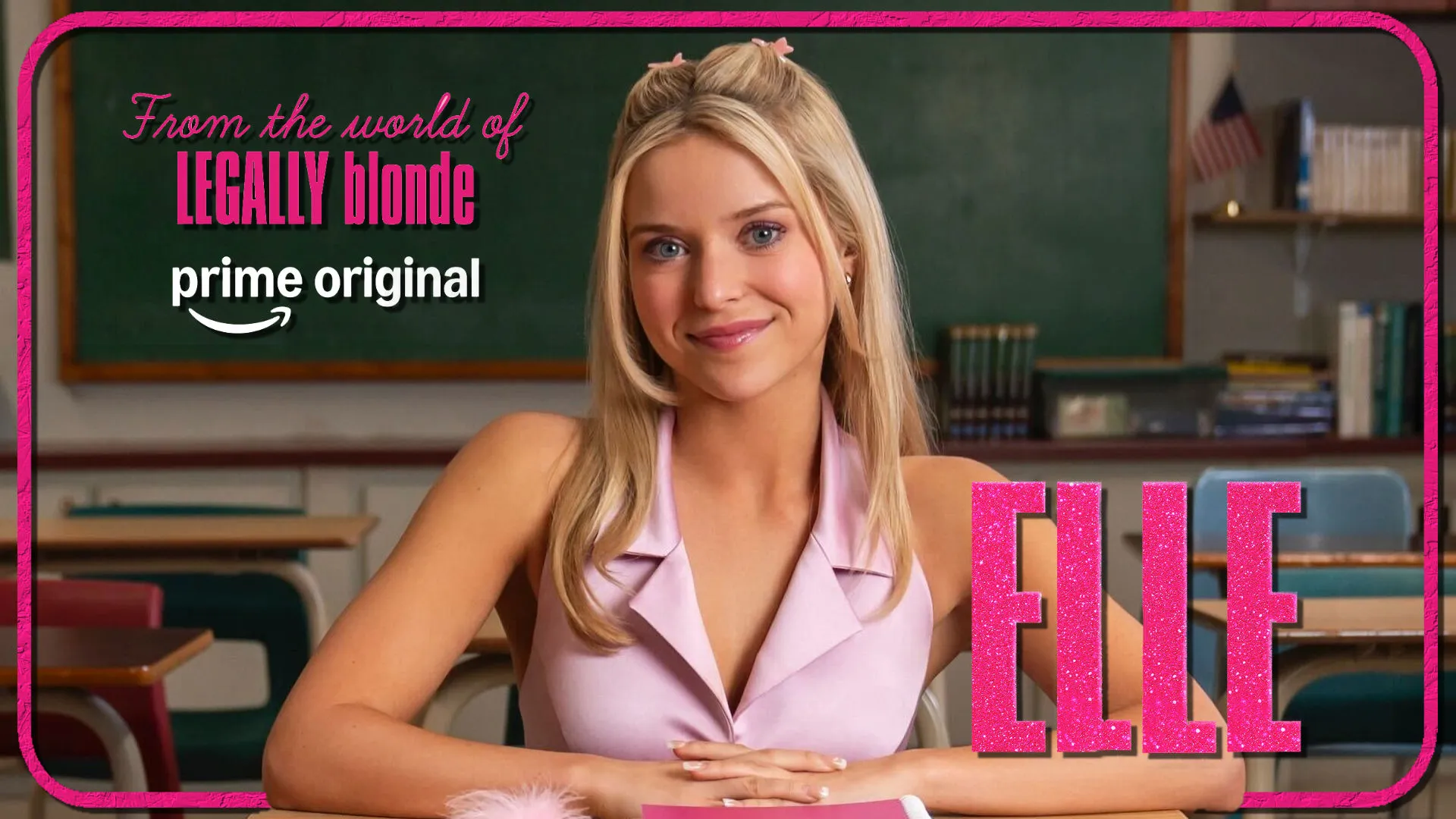
In the early 2000s, the chick-flick reigned supreme; it was an era that gave audiences enduring classics like Mean Girls, Bring It On, and the unapologetically pink Legally Blonde. Prime Video revisits that world with a prequel centered on the iconic Elle Woods, the fashion-forward law student immortalized by Reese Witherspoon.
Rather than following Elle’s journey through Harvard Law, the series rewinds the clock to explore the experiences that shaped her into the confident, relentlessly optimistic woman audiences fell in love with over two decades ago. The question, however, is whether this origin story captures the charm, wit, and heart of its predecessor—or simply relies on nostalgia to carry it across the finish line.
Set in 1995, the series transports audiences to a sun-drenched Beverly Hills before introducing a teenage Elle Woods (Lexi Minetree), a bright, bubbly 16-year-old whose world is turned upside down. After a botched cosmetic procedure forces her plastic surgeon father, Wyatt (Tom Everett Scott), to leave Los Angeles under less-than-ideal circumstances, the Woods family relocates to the rain-soaked city of Seattle in search of a fresh start. As the move becomes the emotional foundation of the series, it also explores the mother-daughter dynamic between Elle and Eva (June Diane Raphael); portraying two women learning to navigate an unfamiliar environment without losing their identities. Both struggle to adapt to a city that feels worlds away from the glamour of Southern California, yet the family’s optimism remains unwavering as Eva reminds them, “The Woods family is adaptable.”
The series immediately establishes its mid-’90s identity with Garbage’s “I’m Only Happy When It Rains,” a fitting anthem that bridges the tonal shift from sun-drenched Beverly Hills to perpetually overcast Seattle. The soundtrack continues to lean into nostalgia with well-placed needle drops from artists like Mariah Carey, Nirvana, and Radiohead, grounding the series in its 1995 setting while reinforcing the emotional contrasts between Elle’s old and new worlds. Even giving fans the origin story of her beloved Chihuahua, Bruiser, a rescue dog who like Elle, is proudly identified as a Gemini. The running gag about Elle’s zodiac sign reinforces the qualities that have long defined the character: optimistic, charismatic, adaptable, and endlessly resilient.
Seattle, however, proves to be Elle’s greatest challenge. Accustomed to being effortlessly popular, she suddenly finds herself an outsider at her new high school. The culture shock is immediate, with classmates dismissing her signature pink wardrobe and California confidence as superficial. The series mischievously frames Seattle as Elle’s opposite: a place where flannel replaces fashion and practicality and plaid becomes the new pink.
Beneath its fish-out-of-water comedy, Elle explores a familiar coming-of-age conventions: fitting into a new school, navigating bullying, developing feelings for a friend’s ex-boyfriend, juggling multiple romantic interests, and unraveling a school mystery. That central mystery ultimately serves as the narrative bridge between the teenage Elle audiences meet here and the aspiring lawyer introduced in Legally Blonde, planting the seeds of the justice-driven woman she will eventually become.
Unfortunately, the momentum to keep the show alive outside of nostalgia is what stumbles. Amidst the exaggerated Los Angeles stereotypes and tropes, Elle is repeatedly reduced to “the blonde barbie from Beverly Hills,” Despite its period setting, the Woods’ world often feels surprisingly contemporary, there are moments when the dialogue and character interactions feel disconnected from 1995, making the nostalgia feel more cosmetic than lived-in.
Ultimately, Elle struggles to justify its place within the Legally Blonde universe. While it successfully captures Elle Woods’ signature pink pride and charm, it doesn’t uncover new dimensions of the character that warrant an entire origin story. All Eight episodes are available to stream on Prime Video.