
















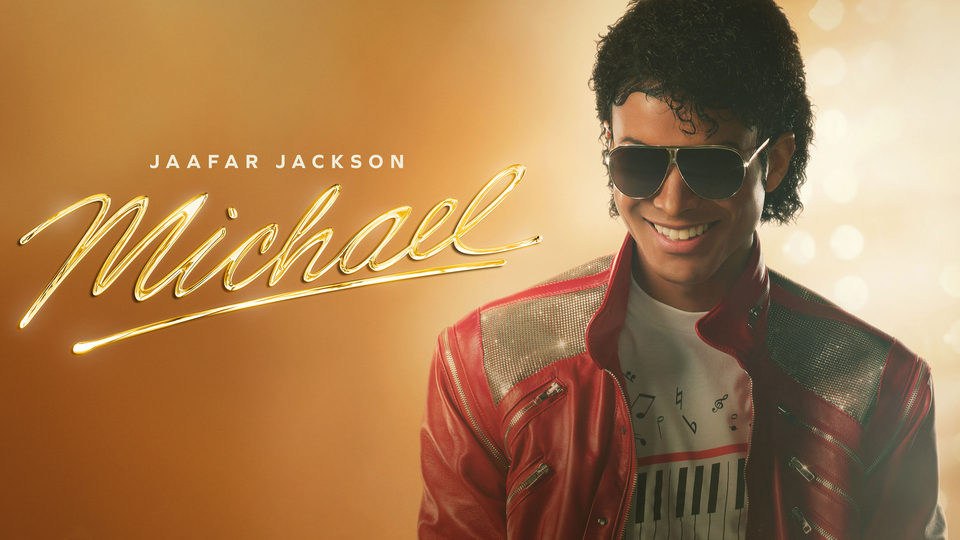
Michael Jackson, the “King of Play,” may be long gone, but the world still can’t stop till it gets enough of his story. That legacy returns to the big screen in Michael, from writer John Logan and director Antoine Fuqua.
The film opens with the five Jackson brothers and a young Michael (Juliano Krue Valdi), portrayed as poor Black children growing up on Jackson Avenue in Gary Indiana. Under the strict guidance of their father and manager, Joe Jackson (Colman Domingo), they are molded into The Jackson 5. By the early 1970s, Michael emerged as the fresh-faced teenage frontman of the Motown-signed family phenomenon.
During these formative years, Michael is depicted as deeply lonely and isolated, often feeling separate, even from his own siblings. He appears to connect more easily with animals than with people, remarking, “they’re my friends, not my pets.” As his talent propelled the family to wealth and carried them from Gary to California, Michael increasingly became the family’s breadwinner. His mother, Katherine Jackson (Nia Long), is portrayed as a passive bystander; silently disapproving of Joe’s harsh parenting methods, yet rarely intervening as her children endured emotional and physical abuse. Michael is shown facing years of cruelty, including insults about his appearance, such as being called “big nose,” a wound the film suggests later influenced his decision to undergo rhinoplasty. The film frames his relationship with Joe as a painful trauma bond, where Joe repeatedly reduces him to a “money-making machine,” reminding him that family always comes first.
Michael Jackson’s greatest cost of fame was his childhood; surrendered so early that it later manifested in what many have termed “Peter Pan syndrome.” As Jackson once reflected, “I never had the chance to do the fun things kids do.” In adulthood, he sought to reclaim that stolen innocence through Neverland Ranch. The amusement park-like estate modeled after the world of Peter Pan, the eternal boy who could fly and never grow old. Jackson openly embraced the parallel, once remarking, “I totally identify with Peter Pan, the lost boy from Never Neverland.”
The film also gestures toward the illusions and manipulations of the entertainment industry. As one music executive notes, “In this industry, you can make up anything.” Michael is portrayed as a child carefully engineered for mass appeal, his age early on being lowered by years and his image meticulously packaged to preserve marketability. In that sense, both Joe Jackson and the broader music industry emerge as complicit in the exploitation of child stardom: profiting from his extraordinary gifts while depriving him of an ordinary youth. Yet throughout the film, Michael’s purity of intention remains central. He is depicted as an artist who genuinely longed to unite people through his work, believing that “music and dance is a universal language, and we can change the world.”
The film’s sound design is especially rich, with transitions from song to scene flowing seamlessly and with clear intention. Naturally, Michael Jackson’s catalog remains as exhilarating as ever, his hits bursting through the speakers with the same freshness and vitality that made them timeless. Michael is at its strongest when charting his artistic evolution, his growing musical maturity, creative discipline, and meticulous performance process. From the voice to the visuals to the larger vision, the audience is carried through the spellbinding ascent of the King of Pop.
One of the film’s more revealing touches is its emphasis on Michael’s love of cinema. Several scenes show him curled up with Katherine Jackson, watching classics like Singin’ in the Rain, horror flicks, and other screen favorites that would later inform his own artistry. The film smartly traces how those cinematic influences eventually surfaced in his music videos, performances, and visual imagination.
The performances are uniformly strong, with Jessica Sula bringing presence to La Toya Jackson, Kendrick Sampson lending assured gravitas to Quincy Jones, and Colman Domingo alongside Nia Long delivering strong work as the Jackson parents. The ensemble as a whole proves charismatic and convincing, though the absence of Janet Jackson registers as a noticeable void throughout the film.
Yet the undeniable centerpiece is Jaafar Jackson, who inhabits the role of his late uncle with remarkable poise and uncanny precision. His physical resemblance to Michael is striking, his movement carries the same effortless musicality, and his light, airy vocal quality recalls the icon with astonishing authenticity. Elevating it all is the exemplary work of the costume, hair, and makeup departments, whose transformative craftsmanship enables each performer not merely to portray these figures, but to fully embody them.
The film’s most frustrating limitation is its repeated willingness to gesture toward the weightiest chapters of Michael Jackson’s life, only to withdraw before offering meaningful insight. It brushes against subjects the public has long wrestled with, yet rarely lingers long enough to interrogate them. Emotionally charged moments are often hurried aside in favor of the next musical set piece, denying the narrative space to let pain, contradiction, or reflection fully register. What remains missing is a more penetrating study of Michael’s interior world: the trauma bond embedded within his family dynamic and the psychology of a man simultaneously adored and profoundly isolated.
There is, too, a notable missed opportunity to examine Jackson as a ‘proud Black artist’ navigating an industry that has historically commodified Black brilliance while neglecting Black humanity. The film hints at the machinery that profited from a gifted child performer, yet stops short of interrogating how exploitation, pressure, and premature fame may have shaped the fractures that later defined his adulthood. In doing so, it sidesteps a larger conversation about the mental and emotional toll placed upon Black men asked to perform greatness at any cost.
As a portrait, the film often resembles an elegantly assembled compendium rather than a deeply felt character study. It is polished where it should be probing, reverential where it might have been revelatory. Audiences did not necessarily need sensational disclosures or scandalous revelations; what was needed was a richer emotional vocabulary for understanding who Michael was when the spotlight dimmed and the applause ceased.
Ultimately, Michael functions effectively as a celebratory time capsule of an unparalleled life and legacy. Yet it leaves lingering the same unanswered desire: to know, more fully, the man behind the mic, and the face in the mirror
CHRISKRATING★★★☆☆