














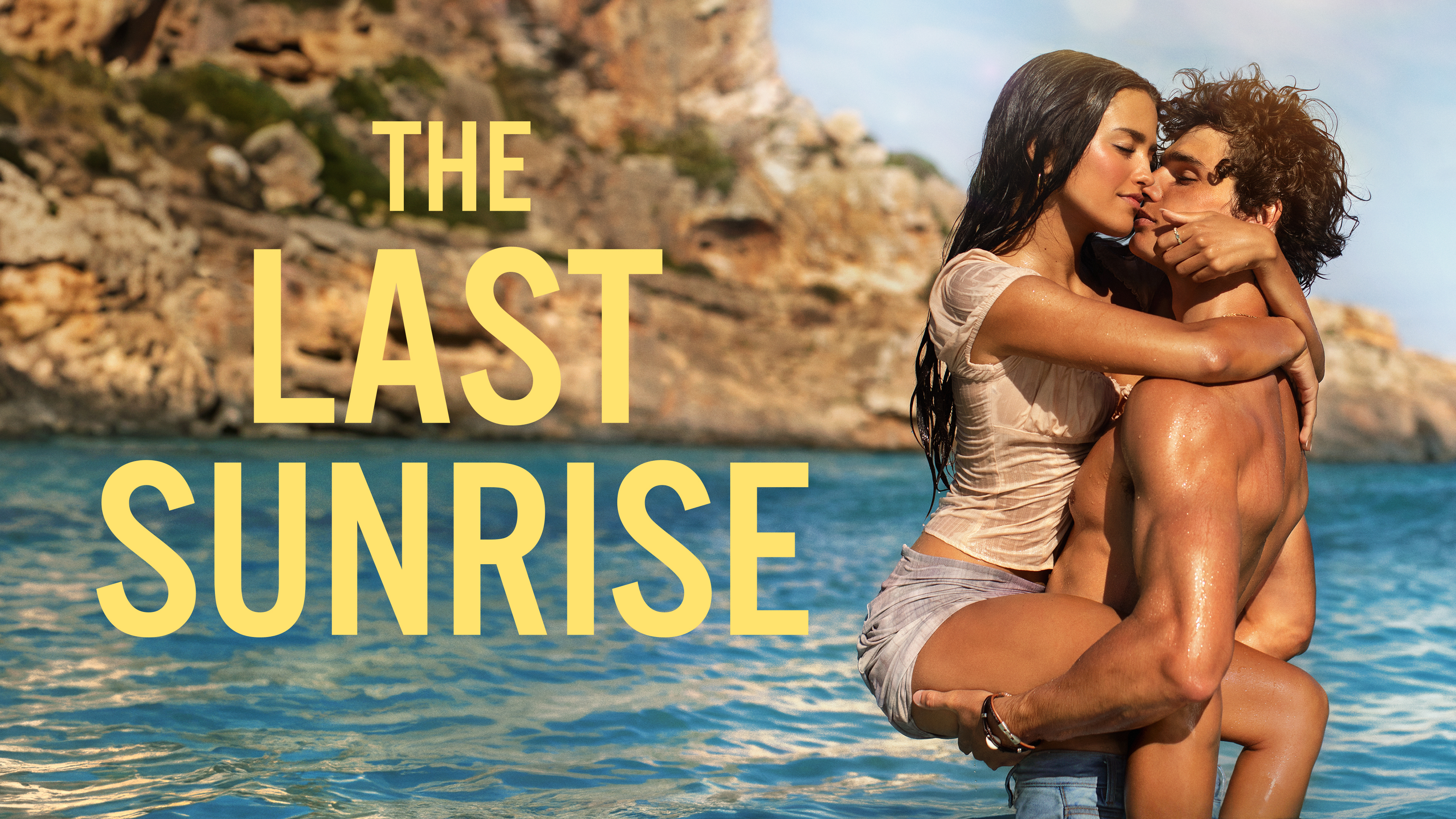
A dancer’s greatest fear is losing the very ability that has defined their existence. To dance is to live through the body, making the prospect of losing control of it feel tantamount to losing oneself. As someone who grew up with a chronic illness while dancing, The Last Sunrise, the contemporary romance adapted from Anna Todd’s novel and scripted by Anna Klassen, strikes an unexpectedly personal chord.
Oriah “Ry” is a company dancer (not the exotic kind) from Houston, Texas. The film opens with her performing onstage, her body seemingly in perfect command, until the exhilaration of movement is abruptly interrupted by a seizure. “My body became my enemy, but the ocean. One last summer. One last sunrise with him,” the film declares, ushering Ry toward a summer that will force her to reconsider what it means to truly live.
Her diagnosis presents an especially cruel paradox. Surgery could remove the tumors responsible for her seizures and potentially free her from them altogether, but at the risk of erasing memories, impairing her ability to walk or even taking away the dance that has become inseparable from her identity. Medication offers another form of compromise: physical stability at the expense of emotional vitality, leaving Ry feeling numb and estranged from her own life.
Ry travels with her mother, Isolde (Eva Longoria), to Mallorca, the Spanish island where Isolde grew up. Isolde is a businesswoman who has devoted herself to constructing a secure life for her daughter, but her protectiveness has also hardened into emotional distance. Even on her return home, her attention remains tethered to work as she pursues a lucrative real estate development through her company, Rydwyn.
Ry makes the conscious decision to stop taking her medication. She disables her alarms and goes dancing beneath strobe lights, fully aware that they could trigger another seizure. She wants one summer in which she can feel alive. Her recklessness becomes an expression of a much deeper frustration and the desire to experience her youth without constantly negotiating with her own body.
Mallorca resists being reduced to a luxury destination, but a polished paradise. The Last Sunrise situates its romance against the increasingly fraught relationship between the island’s residents and the tourists—guiris, whose presence is both economically vital and culturally disruptive. Tourism sustains livelihoods while simultaneously threatening the traditions, land and industries that made the island worth visiting in the first place.
Julian (Fernando Lindez), the film’s resident misunderstood bad boy, embodies that contradiction. Raised within a family fishing business, he has inherited a relationship with the sea that is both cultural and economic. Yet the waters that sustain his family are being damaged by the very development bringing wealth to the island. Chemicals used to maintain the immaculate lawns of tourist properties seep into the water and poison the fish, creating an uneasy symbiosis between preservation and profit.
Naturally, Ry meets Julian at a nude beach. She gets an eyeful of naked men, wildlife and, well, weiners; a fairly memorable introduction to the boy who will become her summer romance.
Julian is desperate to preserve his family’s fishery, borrowing money from a man named Carlos to keep it afloat while developers circle the family’s valuable docks. Isolde’s company is among those interested, offering far more than the property is worth. Her response is quintessentially corporate: “Business is business. It’s not personal.” For Ry, it becomes very personal and her mission to persevere the Island.
The more time she spends with Julian, the more she recognizes what her mother has failed to see that Mallorca is not reduced to a commodity. It is a living history composed of families, traditions and generations of attachment to the land. Ry challenges Isolde’s transactional worldview, insisting that “it’s not just about money” and reminding her that development cannot erase what existed before it. “When you’re building the hotel, don’t forget what was here before,” the history, the people, and the culture.
The film’s environmental and cultural conflict consequently becomes an extension of its more intimate mother-daughter story. Isolde approaches life through protection and control, while Ry is desperate for autonomy, even when autonomy means making choices that could endanger her. Both women are attempting to preserve something precious; they simply just disagree about what preservation requires.
Perhaps no YA romance appears capable of resisting the gravitational pull of a previous-generation love story. Isolde and Julian’s father, Matteo, were once each other’s first loves. As teenagers, he was “the air she breathed and the water she swam in.” They imagined a future together until the death of Isolde’s mother made Mallorca unbearable. Isolde fled, asking Matteo to follow, but he refused to abandon his family or the fishing business that tethered him to the island.
Decades later, Isolde carries the guilt of believing she abandoned Matteo and the island only to become the face of the loss that befell his family. “Maybe they can have the future that we never had,” Matteo says; the possibility that their children could have the future they never did becomes another layer of romantic mythology.
At its best, however, The Last Sunrise belongs entirely to Ry. Her refusal to take her medication is not merely the impulsive behavior of a reckless young protagonist; it is an attempt to reclaim ownership over a body that has increasingly felt like something outside her control. She wants to experience the things adolescence and young adulthood supposedly promise: sex, romance, spontaneity, dance; without having to calculate the medical consequences of every decision. On this island she learns to live “like it’s your last.”
That sentiment carries particular weight for me as someone who was burdened with epilepsy, I recognize the complicated longing behind Ry’s resistance. One of the most difficult aspects of living with a chronic illness can be the desire to feel ordinary—to wake up without immediately thinking about medication, limitations or the possibility that your body might suddenly betray you. There was a period when I neglected my own medication because, beneath the irresponsibility, was a longing to experience life without feeling dependent on something simply to participate in it.
For a young performer, that tension can be especially profound. The body is not merely a vessel; it is the instrument through which an artist works. The Last Sunrise understands the particular cruelty of a condition that threatens both physical autonomy and artistic identity. Ry’s seizures are not treated as a single dramatic obstacle to overcome, but as an ongoing negotiation with the world around her that requires her to recognize triggers, modify her behavior and continually reckon with what her body will allow.
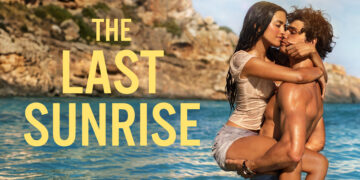
The romance between Ry and Julian provides the film with its more conventional pleasures. Lindez and his co-star generate an easy, palpable chemistry, their relationship steeped in the heightened sensuality of a summer romance. And, true to the Prime Video YA tradition, the film has no qualms about letting its young lovers get steamy. They rock the boat, get to hunching and drift beneath the Mallorcan lights as though summer itself might preserve them from whatever awaits beyond it.
The soundtrack further sells that fantasy, weaving in hits from Bad Bunny, Karol G and Sabrina Carpenter. The music, like the cinematography, turns Mallorca into a seductive temporary escape, making the viewer feel less like an observer than another tourist swept into Ry and Julian’s fleeting paradise.
The Last Sunrise is not an especially radical entry into the YA romance canon. Its narrative is familiar, its conflicts often uncomplicated and its trajectory occasionally predictable. Yet its treatment of chronic illness gives the familiar coming-of-age formula an emotional dimension that feels more intimate than its simplistic plotting suggests. Beneath the sun-soaked romance is a story about bodily autonomy, inherited grief, cultural preservation and the terrifying freedom of deciding how to live when time feels finite.
“Thank you for saving the last sunrise for me. You can have all my firsts and my lasts.” Judging by that cliffhanger, Ry and Julian’s story has not reached its final sunset. Like the sun itself, their romance appears destined to rise again
CHRISKRATING★★★