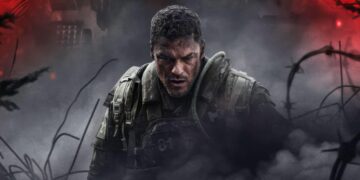








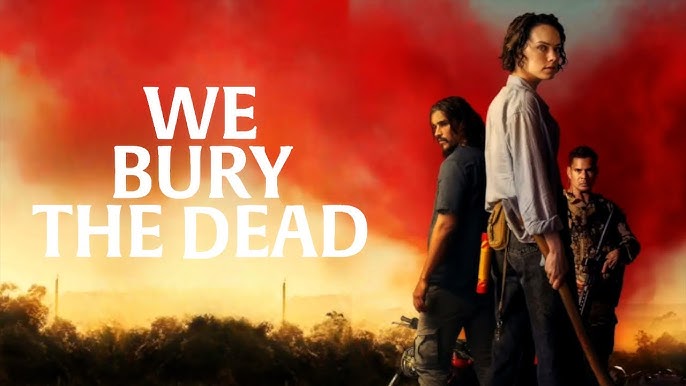
Zombie survival horror shows no signs of fading, and writer-director Zak Hilditch adds a contemplative entry to the genre with We Bury the Dead. Set in a post-apocalyptic landscape, the film imagines the aftermath of an accidental experimental weapon deployed off the eastern coast of Tasmania, instantly claiming the lives of 500,000 people. The victims feel no pain, slipping instead into a brain-dead, sleep-like state. The film’s central conceit emerges from this unsettling ambiguity: some of the dead inexplicably return, while others do not. With no scientific explanation offered beyond the notion of “unfinished business,” We Bury the Dead leans into existential unease rather than conventional zombie mythology.
American physiotherapist Ava Newman (Daisy Ridley), whose husband Mitch (Matt Whelan) was on a business trip in Woodbridge, volunteers with an Australian military unit tasked with retrieving and disposing of the dead, driven by her need to locate her husband, dead or alive. In this devastated landscape, the living coexist uneasily among the corpses, searching for closure as much as survival.
Though the film centers on the undead, they are never explicitly labeled as zombies, leaving the audience to draw its own conclusions. Their design echoes familiar genre predecessors; peeling skin, scabbed flesh, bloodshot eyes, and limited speech, paired with varying levels of speed depending on aggression. One unsettling distinction is their constant teeth-chattering, a grinding tic that adds to their unnerving presence. The post-apocalyptic setting is vividly rendered, and the performances remain consistently solid throughout.
The film’s first act unfolds with a steady, effective sense of buildup, but the second and third acts introduce a pronounced tonal shift that pulls the story away from its zombie-horror foundation. While Ava’s motivation to find her husband remains intact on paper, the passage of time steadily erodes the stakes, diminishing emotional investment in her goal. The eventual reunion proves flat and underwhelming; whether her husband is dead or alive ultimately feels inconsequential. Compounding this is the film’s limited interest in the broader world, offering little insight into how civilians in surrounding regions are surviving amid the devastation.
Ultimately, We Bury the Dead is a serviceable film that leans more heavily toward drama than horror as it progresses, a shift that shapes both its tone and its handling of the central characters. As a result, it is unlikely to satisfy audiences seeking a more traditional or consistently thrilling zombie experience.
CHRISKRATING★★☆☆☆