










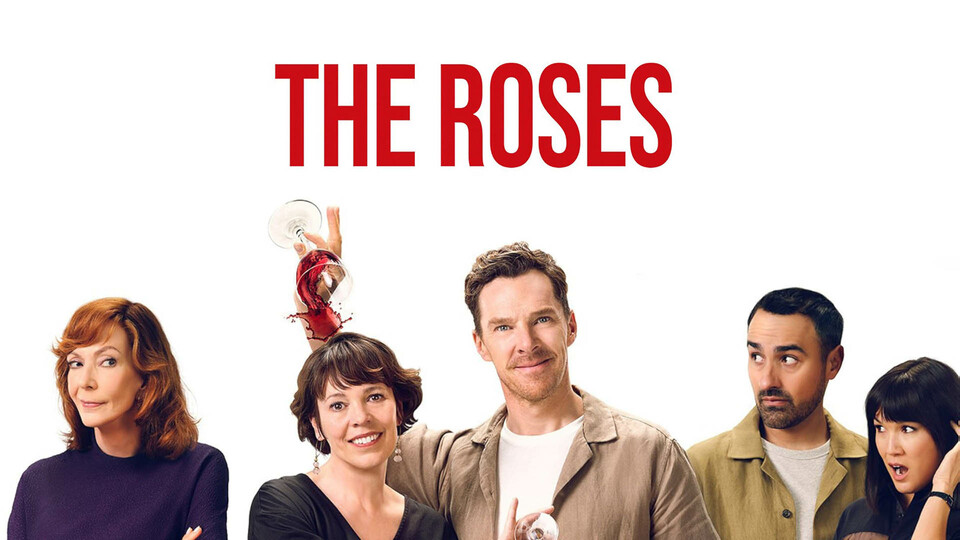
The Roses is a satirical dark comedy directed by Jay Roach, with a screenplay by Tony McNamara. Loosely adapted from Warren Adler’s 1981 novel The War of the Roses and reimagined after the 1989 film, this version casts Benedict Cumberbatch and Olivia Colman as the coldhearted, chaotic lovers at its center.
Cumberbatch and Colman portray Theo and Ivy, a picture-perfect couple whose fairytale marriage begins to unravel. From the outside, they seem to have it all: he’s a celebrated architect, she’s a gifted cook on the rise, they share two adoring children, and their dream home awaits completion. But cracks soon appear; Theo’s career falters, and Ivy’s ascends. The balance of their marriage shifts, turning their once-idyllic life into a battlefield of ego, ambition, and heartbreak.

The rose petals fall as their love withers, decay setting in where passion once bloomed. Cumberbatch and Colman make for a delightfully catty pairing, their sharp British wit elevating the crude humor without tipping into excess. The vulgarity is present, but never gratuitous, allowing the banter to land with bite rather than bluntness. Both deliver sensational performances, showcasing remarkable chemistry and range. Together, they shine in equal measure, finding nuance in the emotional beats while leaning fully into the comedy with effortless charm.
The film’s well-rounded supporting cast helps it achieve a balance between American and British palates. Visually, the film leverages its characters’ professions, an architect and a chef, both sweeping architectural details and luscious close-ups of Ivy’s culinary creations. Paired with rich greenery and natural backdrops, the cinematography shines, further supported by a score that, while not extraordinary, serves the film effectively.

The narrative structure feels fragmented, particularly in the way the children’s relationships with Theo and Ivy are handled. After brief interactions with their parents, the kids often fade into the background, leaving their presence underutilized. Greater integration of their perspectives could have grounded the story and enriched the central dynamic. Pacing is another stumbling block, proven to be uneven; not in terms of runtime, but in how much emphasis is placed on establishing the family’s domestic rhythm. By the time the film pivots toward chaos and destruction, the shift feels contrived rather than organic. Still, the emotional stakes remain clear: I genuinely wanted Ivy and Theo to find their way back to each other. Without delving into spoilers, the final act, down to the very moment the screen cuts to black, left me stunned and uncertain whether the ending was a triumph of boldness or a stumble in execution.
Leaving The Roses, I found myself adrift in thought, the film echoing in questions that lingered long after the credits faded. Can two people truly remain bound by love until death parts them, or does passion inevitably wither, bleeding out until nothing remains? Perhaps that uncertainty (paired with the performance of the woeful lovers) is the film’s greatest strength; it lingers, unsettling and unresolved, much like love itself.