

















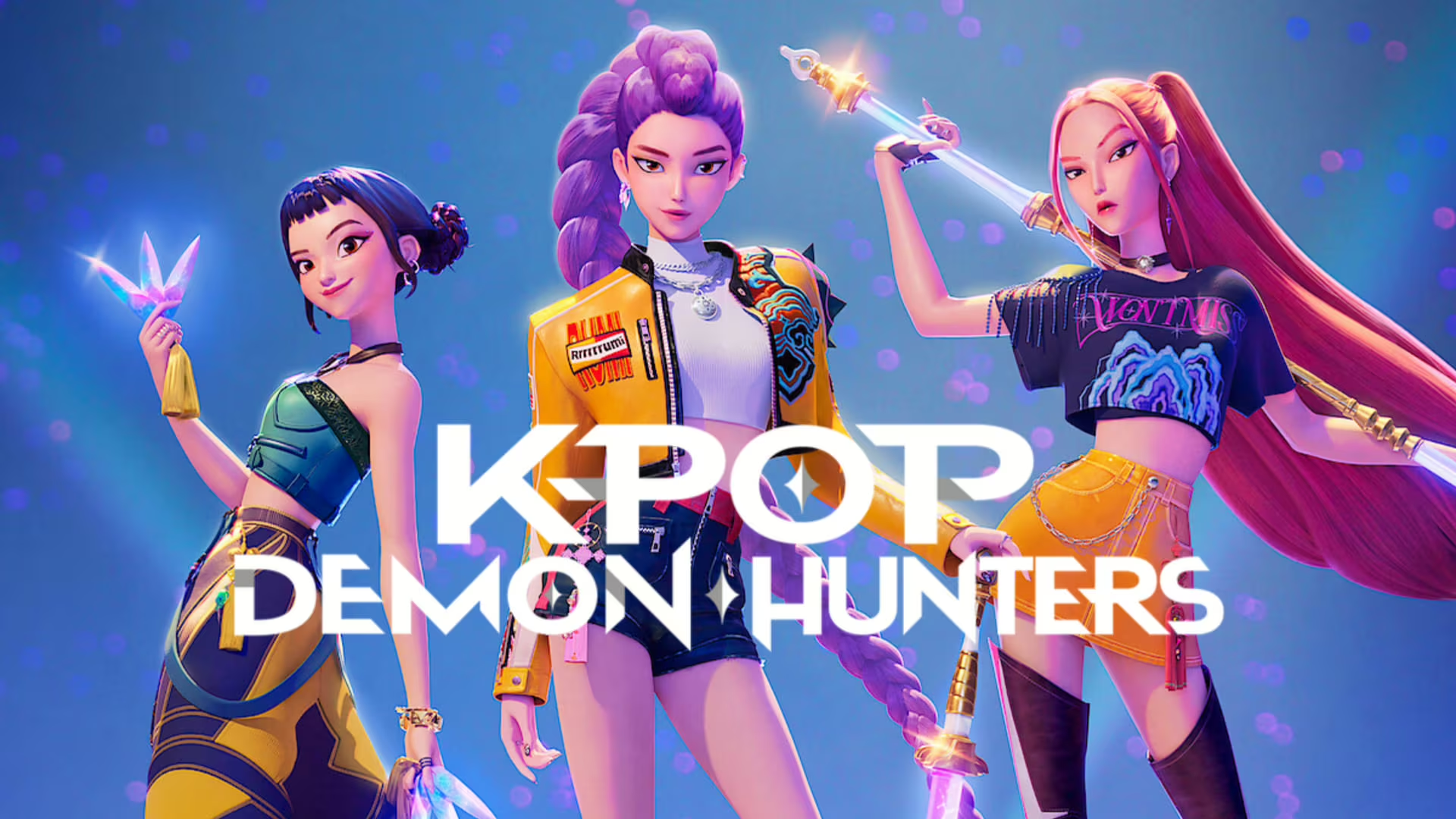
Never in a million years did I imagine that an animated musical centered on a fictional K-pop group would turn me into a full-fledged stan—but K-Pop: Demon Hunters did exactly that. Directed by Maggie Kang and Chris Appelhans, and produced by Sony Pictures Animation for Netflix, this unexpected gem is co-written by Kang, Appelhans, Hannah McMechan, and Danya Jimenez, based on a story conceived by Kang herself.

Every generation has its iconic trio, and in this world, they’re global pop stars by day and secret demon hunters by night. The film follows HUNTR/X—a girl group composed of Mira (May Hong), Zoey (Ji-young Yoo), and Rumi (Arden Cho) as they balance fame, friendship, and the fate of humanity. These stars use more than just their voices to connect with fans; their songs possess literal power, strong enough to battle dark forces and sustain the Honmoon, a spiritual barrier that keeps the demon realm at bay.
When a rival boy band, the Saja Boys, bursts onto the scene, harboring a sinister agenda and demonic roots, HUNTR/X must reclaim their stage and save their fans’ very souls. The metaphor of selling your soul for fame is made visceral through Jinu (Ahn Hyo-seop), a demon-turned-idol who trades his humanity for success, only to become a vessel of destruction. The film cleverly critiques the cost of celebrity, the fleeting nature of virality, and the spiritual hunger often masked by stardom.

From a sensory standpoint, the film is a delight. The vibrant animation, kaleidoscopic fashion, and intricately choreographed fight scenes explode with color and energy. The original music is catchy, thematically rich, and central to the story’s momentum. Lyrics like “Let me be your idol” and “We are hunters, voices strong, slaying demons with our songs” blend pop perfection with potent allegory. Even the demons’ seductive harmonies feel eerily compelling, highlighting how music can be both healing and manipulative.
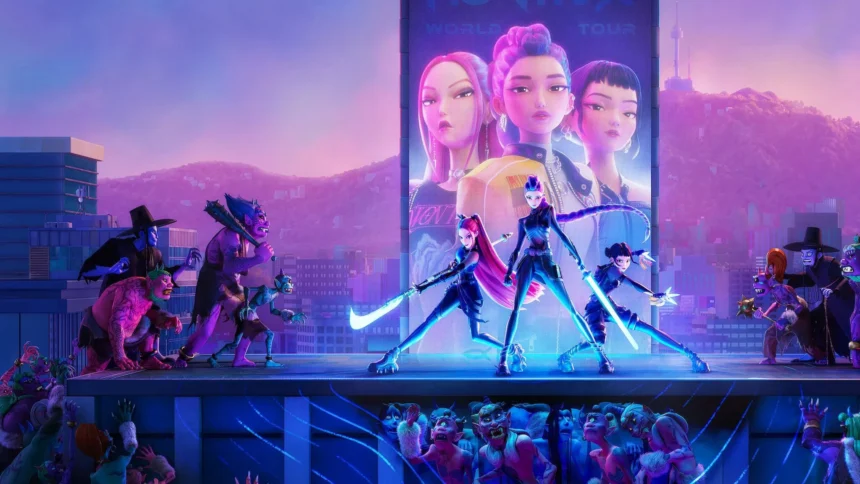
More than a stylish genre mashup, K-Pop: Demon Hunters explores the spiritual resonance of music itself. As performers feed off the energy of their fans, the line between connection and consumption blurs, and fans unwittingly offer more than applause. Yet the film never loses its sense of fun, balance, or empowerment. At its core, it’s about the strength of sisterhood, the price of integrity, and the fight to protect what matters most.
Whether you’re a K-pop enthusiast or a total skeptic like I was, this film might just surprise you.