

















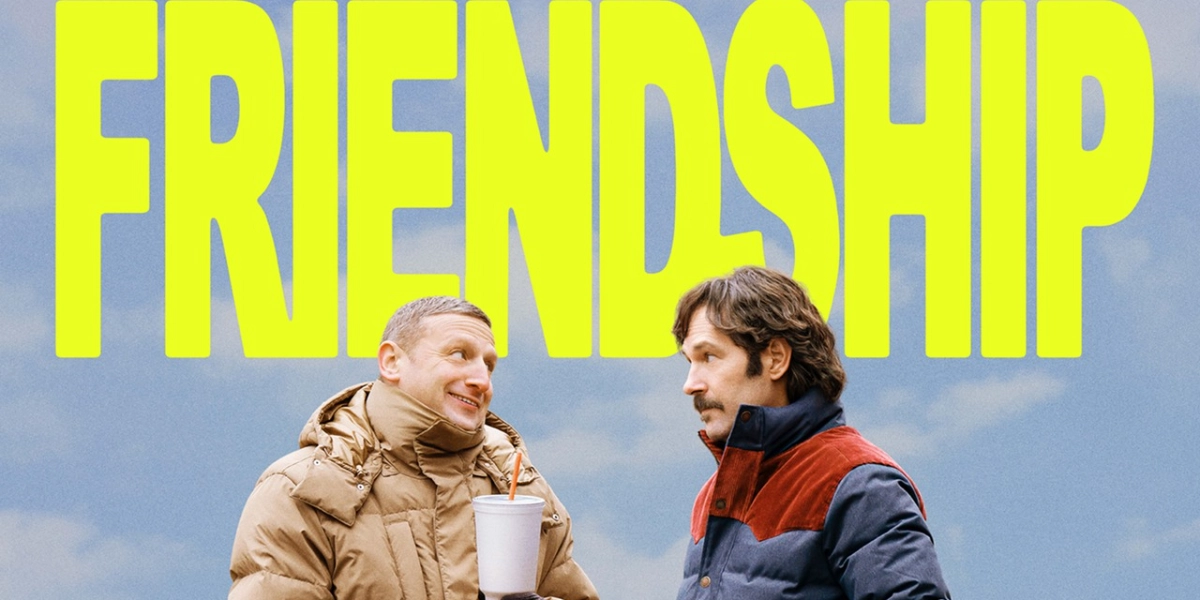
A24’s latest entry into the emotional horror-drama sphere tackles a quietly devastating theme: the epidemic of male loneliness. Through a moody, minimalist lens, the film explores the decay of friendship, the struggle for vulnerability, and how the modern man copes or fails to cope with emotional isolation.
Friendship centers on suburban dad Craig, who becomes unmoored when he meets his magnetic new neighbor, Austin. What begins as a hopeful attempt to form a genuine adult friendship spirals into obsession, threatening to unravel both men’s lives. Tim Robinson as Craig delivers the kind of haunting, cringe-filled performance that lingers well after the credits. His every gesture radiates longing and insecurity. Paul Rudd’s Austin is equal parts charming and anxious, his subtle unease grounding Craig’s desperation in realism. The chemistry between Robinson and Rudd is magnetic and the film paints loneliness in painfully authentic strokes.

This film thrives in tonal complexity, being both a comedy and psychological horror. It’s deeply uncomfortable and incredibly funny, sometimes in the same breath. The strength of Friendship lies in its careful pacing and emotional texture. Dialogue is loaded with subtext; awkward silences hold as much weight as confessional monologues. Director Andrew DeYoung uses restrained camera work, moody lighting, tight close-ups to crisscross the line between comedy and dread, transforming familiar suburban locations into claustrophobic spaces.
The score, composed by Keegan DeWitt is minimal and synth-driven and pulses with unease. There’s a lonely hum underneath everything, echoing Craig’s internal spiral. When the music ramps up, it almost feels like it’s mocking him—highlighting how out of touch he’s become with reality and how far he’s willing to go just to feel accepted.

Loneliness and desperation are central characters in this film. It examines what happens when you feel invisible for too long and how you start to shape-shift to fit what you think others want, just to be loved. Craig buys Austin gifts, mimics his style, and even starts copying his behavior. The desperation becomes physical, messy, and at times, unhinged. But it’s never mean-spirited, there’s always a thread of empathy running through, a recognition of how easy it is to lose yourself when you’re starved for human connection.

By the end, Friendship isn’t about right or wrong—it’s about how vulnerable and embarrassing it is to want to be loved, and what it costs when that love doesn’t come freely. It’s hilarious, heartbreaking, and haunting.
Friendship doesn’t rush toward resolution, and that’s part of its power. The film leaves us unsettled, less with spectacle than with the reflection of our own social anxieties and fears of being replaced, forgotten, or disconnected.