

















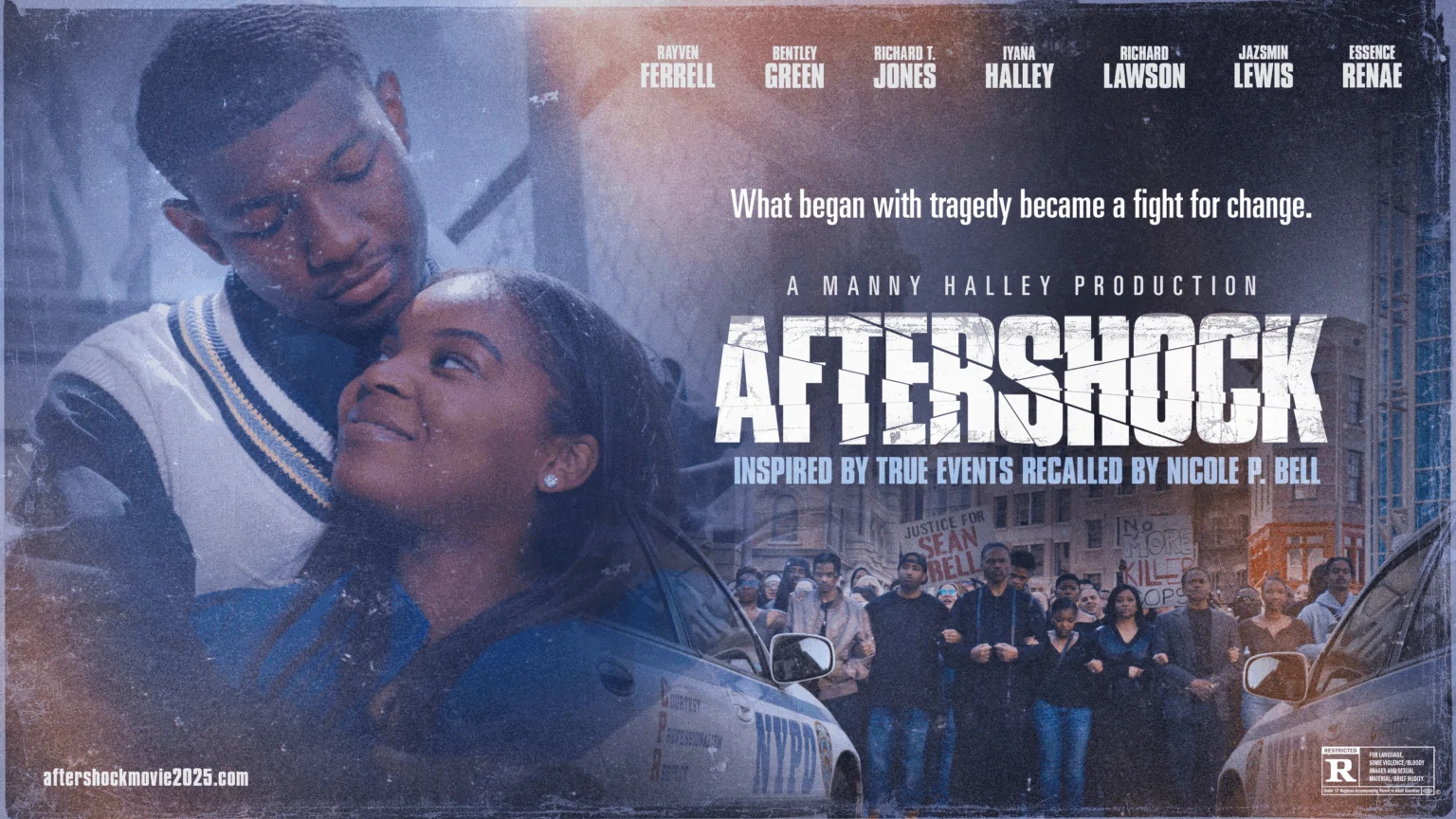
Nearly two decades after the tragic night that claimed the life of Sean Bell, played with quiet poignancy by Bentley Green, writer-director Alesia Glidewell revisits the harrowing case of the unarmed 23-year-old who was gunned down by five undercover NYPD officers on the eve of his wedding. Glidewell frames the narrative through the perspective of Bell’s fiancée and high school sweetheart, Nicole Paultre Bell, portrayed with resonant emotional depth by Rayven Symone Ferrell, charting her unwavering pursuit of justice and the arduous path toward healing.
The film charts Nicole’s turbulent journey through the five stages of grief: denial, anger, bargaining, depression and, ultimately, acceptance. Immersing the audience in the emotional wreckage left in the wake of Sean’s death. Glidewell is particularly attuned to the burden placed on Nicole: the unspoken expectation that she embody the steadfast, unbreakable image of a strong Black woman even as her world collapses around her. It’s a portrayal that feels both deeply human and profoundly respectful to Sean’s legacy.
![Aftershock: The Nicole P. Bell Story' Brings the Sean Bell Case to the Big Screen [TRAILER] | Blex Media](https://i0.wp.com/blexmedia.com/wp-content/uploads/2025/10/News-website-38.png?fit=800%2C450&ssl=1)
One of the film’s most gutting moments comes when Nicole is confronted by the callousness of the media. Barely hours after Sean’s death, she’s met not with condolences but with the question, “Did Sean carry a gun?” Her stunned reply, “My fiancé was just murdered and you’re asking me if he carried a gun?,” underscores the immediate rush to cast him as the aggressor rather than the victim. As the film pointedly reminds us, he had no record, no weapon, “completely innocent, shot down in a hail of bullets… 50 shots while his bride-to-be slept, anticipating the best day of her life.” What renders the story all the more devastating is the knowledge that none of this is fiction. These events played out not in the distant past but within the last twenty years, a sobering reminder of the real lives and loved ones forever altered.
On a technical level, the film does an admirable job transporting viewers back to 2006 Queens, New York, an era defined by low-rise bootcut jeans, layered tops and the unmistakable pulse of Fantasia’s “When I See U” on the radio. The soundtrack leans unapologetically into its early-2000s roots, a warmly familiar collection of Black musical touchstones that practically invites audiences to sing along. Both Bentley Green and Rayven Symone Ferrell not only capture the emotional truth of Sean and Nicole, but their physical resemblance adds an additional layer of authenticity.
As the real-life tragedy spread beyond the boroughs, the film acknowledges the national response, including the involvement of civil rights leaders like Rev. Al Sharpton played with seasoned gravitas by Richard Lawson and Jay-Z, who established an educational trust fund for Bell’s children. Nearly twenty years later, there’s a poignant sense of full-circle resonance in seeing Roc Nation serve as an executive producer, helping bring this story back into the cultural spotlight and onto the big screen.
Despite its strengths, the film isn’t without flaws. Some of the flashback sequences feel visually underdeveloped, lacking the clarity needed to firmly delineate past from present. At times the narrative drifts toward melodrama, softening moments that might have landed with greater impact had they been portrayed more starkly. It may not rise to the level of a culturally transformative historical biopic, but it’s earnest and effective in delivering the message it aims to carry forward.
Retelling Black history, even its most painful chapters remains essential to collective remembrance. AfterShock: The Nicole Bell Story arrives in theaters this Thanksgiving weekend, urging audiences to confront a truth that still reverberates nearly two decades later.