

















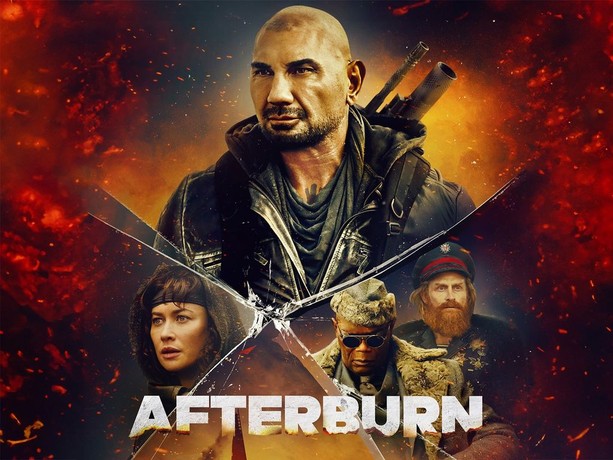
Afterburn is a post-apocalyptic action film directed by J. J. Perry and written by Matt Johnson and Nimród Antal, based on the Afterburn comic. The premise of Afterburn sounds promising on paper: the world’s greatest bounty hunter (Dave Bautista) tasked with relocating anything, even in a world where technology has collapsed and the apocalypse has rendered electronics useless.
Dave Bautista once again finds himself in familiar territory (similar to his role In the Lost Lands), embodying a rugged archetype we’ve seen him play countless times before. The performance isn’t bad, but it leans so heavily into his established persona that it feels recycled. Even Samuel L. Jackson, normally able to elevate the flimsiest material, feels strangely cosplay-like here, his presence more gimmick than gravitas.
The film itself struggles to rise above its derivative foundation. By recombining tropes from vigilante thrillers and post-apocalyptic sagas without adding anything new, Afterburn ends up delivering a “message movie” that has very little to actually say. The screenplay gestures toward cultural critique at one point even staging a scene about stealing the Mona Lisa as commentary on appropriation but the execution is muddled, more surface-level gimmick than sharp satire.
Visually, Afterburn is equally uninspired. The CGI gun effects look distractingly cheap, the scenery is flat and uninspired, and the soundtrack feels like a stock playlist from a generic action-movie library. Instead of building atmosphere, these choices drain the film of tension and make it all the more forgettable.
In the end, Afterburn mistakes formula for familiarity and homage for originality. What could have been a stylish, high-stakes survival story collapses under the weight of clichés, lackluster visuals, and an overreliance on star power.
For a film about finding value in a broken world, Afterburn itself doesn’t offer much worth salvaging.
CHRISKRATING★★☆☆☆